Showing posts with label Race. Show all posts

Monday, May 23, 2016

Everything's Copasetic when Bill Robinson Dances

This entry is part of the Gotta Dance! Blogathon hosted by Classic Reel Girl on May 25th. Click here to view more fabulous entries celebrating dance in film.

~  ~  ~

On Wednesday, May 25th, we celebrate National Tap Dance Day and the birth of the King of Tap himself, Bill "Bojangles" Robinson.

Born May 25, 1878 in Richmond, VA

Today, Robinson is best remembered for the four films he made with Shirley Temple. He has been both praised and criticized for his part in these movies. Praised for breaking race barriers when he and Temple became the first interracial dancing duo to grace the silver screen. Criticized for taking "Uncle Tom" roles where he portrayed servant, slave, butler, and overall protector of a little white girl.

Monday, January 18, 2016

A Tribute to African American Dancers of '30s & '40s

A combination of prep work for this year's Dancing Legs quizzes and a star search for In the Good Old Days of Classic Hollywood and The Wonderful World of Cinema's Marathon Stars Blogathon brought me to the sad realization that many of the world's greatest tap dancers are missing from our public consciousness and film library. Dancers who made possible the likes of Fred Astaire, Hermes Pan, and Eleanor Powell but were pushed aside due to the color of their skin. Dancers who were as talented as Ann Miller or Gene Kelly but never given a fighting chance in Hollywood. Instead their dance routines are limited to decaying film reels or descriptions in a textbook. Today's post is a small step in trying to ensure their legacy is not lost.

For the record, I strongly believe that the celebration of these dancers should not be limited to one day or even one month of the year. I plan to make a concerted effort throughout 2016 to view the rare film appearances of these incredibly talented dancers.


Jeni LeGon

Jeni LeGon was a solo tap dancer whose athletic movements were every bit as good as the male dancers of her day.  After dancing with Bill "Bojangles" Robinson in RKO's Hooray for Love (1935), she scored a contract with MGM. According to dance historian Constance Valis Hill, LeGon was slated to perform in Broadway Melody of 1936, an Eleanor Powell star vehicle, but was taken off the assignment after LeGon "stopped the show" at a promotion event that included Powell. Per LeGon in 2006:
It was a color thing. They said they couldn't use two tap dancers, but that was bull corn.  
From then on, MGM neglected her talent, opting to put her in servant roles instead. The biggest snub must have been when she played maid to dancer Ann Miller in Easter Parade (1948). It is a crime that her dancing skills were squandered.

Jeni LeGon and Bill "Bojangles" Robinson in a publicity shot for Hooray for Love (1935)
Click here to sample their dancing. 

Wednesday, January 6, 2016

Torch Song (1953) ~ Crawford's Return to Dancing

Part of 10 for 2015
 
From the first number, Torch Song gets off on the wrong foot. While Joan Crawford's legs are exquisite, they dance to a song, "You're All the World to Me," already covered by Fred Astaire's feet two years earlier in Royal Wedding (1951). It's not likely audiences would have forgotten the number either--he dances on the walls and ceiling.

The opening shot of Crawford's gams attempts to establish her great musical comeback. The dance that follows is lackluster.

Sunday, November 23, 2014

Kicking off the Holiday Season ~ Holiday Inn

It's Thanksgiving week which means the countdown to Christmas has begun (although if commercials and store decorations are any indication, the shotgun was fired the day after Halloween). While some might hum and hah like Ebenezer Scrooge, I am one of those silly souls who can't wait to switch the station to 24/7 holiday music, deck the halls, and compile the holiday movie viewing list. Since Christmas movies in November can transform my hubby into a humbug, the first film of the season must be carefully chosen. This means the flick cannot be strictly classified as a "Christmas" movie. The answer to this conundrum: Holiday Inn (1942). 

http://en.wikipedia.org/wiki/Holiday_Inn_%28film%29
What better way to kick off the holiday season than by watching a cinematic celebration of the year's holidays?

Thursday, October 30, 2014

Messages from Cat People

Cat People (1942) was an unexpected success. Despite its limited budget and initially being panned by some illustrious critics (The New York Times' Bosley Crowther for instance), the film was a huge hit with audiences. This fluke had critics rubbing their heads, so they went back and watched the movie again. The film proved itself and--to use a term from the genre--it rose from the dead in the eyes of the critics, prompting their praise.

What had the audience caught that the critics had missed? 

Many point to Jacques Tourneur's direction and how he is able to instill fear in the viewer sans blood and gore. Indeed the film is rather silent, forcing its audience to strain their ears to hear the dialogue. This makes the clicking of heels or low growl of a panther all the more adrenaline inducing. In America's Film Legacy, Daniel Eagan also credits editor Mark Robson for some of the suspense: "By altering the tempo of cuts, by juxtaposing wide shots and close-ups, Mark Robson builds tension out of thin air. A sudden noise becomes the equivalent of a shriek" (359). The audience keeps waiting for something to pop out of the shadows, but nothing ever does (that would have cost money). The fear is psychological.

Resisting her sexual urges...
This may be why Cat People is considered a landmark film today, but there is so much more to the movie than new scare tactics. At its center is Irena (Simone Simon), who fears passion will turn her into a deadly panther. Through the course of the movie, we are taught that female sexuality is dangerous and should be repressed. As long as she resists her urges, her husband Oliver (Kent Smith) is safe. Passion can rear its ugly head in more ways than consummation of marriage, though. Jealousy of her husband's properly repressed co-worker Alice (Jane Randolph) causes her transformation--always implied, never seen to maximize suspense. The message is twofold: female sexual repression is good while female jealousy is bad. 

The other Cat Woman (Elizabeth Russell) - Source
Messages about assimilation into American culture also emerge in Cat People. Made during the beginning stages World War II, Irena represents those whom Americans feared. As much as she tries to belong, Irena is marked with the scarlet "O," that of otherness. She is from Serbia, from a little village with customs her husband and his co-workers cannot understand. She speaks with a distinct accent and is acknowledged as "sister" by a fellow foreigner (Elizabeth Russell). When her husband's friends laugh at this strange woman, it is Irena at whom they are laughing, although they may not realize it at the time. Irena is an outsider. She does not and cannot belong. She dies, leaving behind the foreign form Oliver and Alice cannot understand.

Statue of King John slaying a cat - Source
Cat People also covers psychiatry in its messages. Dr. Judd (Tom Conway), the psychoanalyst, becomes the King John figure, purging the city of sin by curing sick minds. He also carries a sword of sorts: a blade within his cane (much like the one Ballin Mundson uses in Gilda). Dr. Judd eventually uses the blade to slay the cat-version of Irena, but he is unable to save his life. Had he truly listened to Irena during their psychoanalytic sessions instead of focusing on his own righteousness, he may have still been alive. His death represents the American public's lack of faith in psychiatry.

The success of Cat People was a pleasant surprise for RKO. Its use of sound, camera angles, and film cuts gives the movie a haunted feel and makes it a fun pick for Halloween. However, it is the messages that gave the movie double appeal to audiences who questioned female sexuality, foreign residents, and psychiatry. 

[Side note: You can catch Cat People on TCM Friday, October 31st at 8 am PST.]

Works Cited

Eagan, Daniel. America's Film Legacy: The Authoritative Guide to the Landmark 
     Movies in the National Film Registry. New York: Continuum International
      Publishing Group, 2010. Print.

Sunday, October 19, 2014

The Image of Rita Hayworth

It's mid-October, Hispanic Heritage Month, and the perfect time to take a quick break from my Career Girls and Marriage series to celebrate Rita Hayworth. She is the birthday girl of the month, born October 17, 1918 (see the getTV Rita Hayworth Blogathon hosted by Classic Movie Hub for a list of wonderful reviews devoted to Hayworth). She is also one of the first Hispanic actresses to make it big in Hollywood although her widespread popularity did not come until after her Hispanic heritage was washed away.


If you are interested in a detailed account of Rita's transformation, you should stop by Backlots and read Lara Gabrielle Fowler's Rita Hayworth and the Loss of Hispanic Identity. (It is a fabulous read!)  

I am fascinated by how Rita Hayworth's all-American, sexy image is engrained into our public consciousness. Maybe my experience is unique, but for a long time my understanding of Hayworth was limited to her on-screen image and commentaries about her sex appeal to American G.I.'s. In fact, the first time I heard someone (probably TCM's Robert Osborne) talk about Rita's Hispanic heritage, I did a double-take, thinking they were discussing Rita Moreno. I have a feeling I'm not alone. In Being Rita Hayworth, Adrienne McLean observes that while the Hollywood publicity machine promoted Rita's "Latin heritage" and "ability as a dancer," they also glorified "her good looks [...] the result of much manipulation" (39). A quick internet search will demonstrate the number of images the powers-to-be presented to reinforce Rita's new American-ness.  

In the minds of her adoring public, Rita Hayworth was the all-American pin-up girl whose pose in a sexy black-laced negligee motivated the boys overseas. 


   "the" pic from Life magazine, 1941

Strangely, the image did not alienate her female fans. Was it because anyone who kept the boys inspired was a-okay? Or was it because her musical comedies brought her down to earth? She evoked memories of a simpler time--albeit whitewashed--as she charmed James Cagney in the musical Strawberry Blonde (1941). She hoofed with Fred Astaire in You'll Never Get Rich (1941) and You Were Never Lovelier (1942) and with Gene Kelly in Cover Girl (1944). When the boys returned, they fell in love with her all over again as she played the title character in Gilda (1946).  

Can't wait to do a write up on this noir someday!

How does the saying go? Women wanted to be her and men wanted to be with her.   

So entrenched was her image, the public was aghast when she dyed her trademark fiery red hair to blonde for Orson Welles' Lady from Shanghai (1947). The film's box office failure was partially attributed to her physical transformation.  


Over a half-century later, Rita's sexy Americanized image remains in our memories, but thanks to a growing body of educated classic movie fans, her Hispanic heritage will never be lost. 

Works Cited

McLean, Adrienne. Being Rita Hayworth: Labor, Identity, and Hollywood
      Stardom. 
Piscataway, NJ: Rutgers University Press, 2004. Print.


This post is part of the “getTV Rita Hayworth Blogathon” hosted by Classic Movie Hub and running during the entire month of October. Please visit getTVschedule to see a full list of Rita Hayworth films airing on the channel this month, and please be sure to visit Classic Movie Hub for a full list of other Blogathon entries.

Sunday, August 31, 2014

Frankly, My Dear: Gone with the Wind Revisited

ISBN 978-0-300-16437-4
The day Molly Haskell's Frankly, My Dear arrived, I was bursting with excitement. For one thing, it is written by Molly Haskell whom I admire for her candid analysis of movies while never losing sight of her love of films. Secondly, I have a very personal connection to Gone with the Wind (1939). My mom loved the movie--so much so that I am named after one of the characters. Watching Gone with the Wind was a momentous event in our household. To this day, I get shivers whenever I hear "Tara's Theme." In many ways, this emotional response is what Haskell's book is about: why the movie and corresponding novel have been embraced by the American public year after year and how the two have influenced society. 

Before purchasing the book, I researched the reviews. There were some complaints that this wasn't a book about the making of the film; however, knowing the author, I didn't expect it to be. That being said, Haskell does include interesting tidbits and anecdotes about the making of Gone with the Wind (hereafter referred to as GWTW) including the exhaustive search for the perfect Scarlett, Clark Gable and Leslie Howards's aversion to making the film (and what enticed them to do so), the amount of writers and directors the overzealous Selznick went through, and the final cost to produce the film ($4,250,000). I already knew most of these facts and suspect GWTW enthusiasts will as well. Point being that Frankly, My Dear is for someone who is looking for something beyond basic trivia.

After establishing the historical importance of GWTW--the first chapter is called "The American Bible"--Haskell discusses the similarity of the three principles: David Selznick (the producer), Vivien Leigh (the star), and Margaret Mitchell (the author of the novel). She describes their backgrounds, arguing that their ambition, internal conflicts, and intensity contribute to the success of the film.  Each had something to prove, to stoke the fire: Selznick to avenge a wrong against his father; Leigh to personify Scarlett in order to win the coveted role, then to complete the film and return to her beloved Olivier; and Mitchell to expose the hypocrisies of upper-crust Southern society

'20s flapper, '30s matron


Although Mitchell did not like the insincerity of high society, she was not willing to abandon her South for Hollywood. In the chapter, "Finding the Road to Ladyhood Hard," Haskell explores the conflicts which plagued the author and thereby shaped the novel and movie. Haskell describes Mitchell as an "outsider/insider" (123). She was both tomboy and Southern lady, a free-spirited flapper and settled society matron, a social butterfly and recluse. Mitchell resisted and then surrendered to the Southern ideal of womanhood. This tug-of-war on her identity is present in GWTW through the virtuous Melanie, who was Mitchell's intended herione, and the scandalous Scarlett, who is the embodiment of Mitchell's rebellious side, too strong to keep subdued on the sidelines. 

Under the guise of  demure Southern lady, Scarlett "gets away with [nonconformity] in a way that is rare, not to say unprecedented in movies, given a double standard that generally grants such immunity only to the male of the species" (98). New concepts of womanhood are allowed to emerge. Haskell points out that Scarlett lacks a maternal instinct (shown more completely in the book than on screen) and rebuffs the idealization of marriage: "'Marriage fun?' replies a disbelieving Scarlett. She's not buying" (102). Additionally, the backdrop of war and Reconstruction makes it possible for the genteel Southern woman to show strength and take on the 'masculine' qualities of leadership and self-preservation:
The woman who wanted nothing more than a shoulder to lean on has become, by default, the mainstay, the authority figure upon whom others must lean. (94)
Men's roles are also transformed in GWTW. Typically reserved for women, the categorization of virgin and whore can be applied to the leading men of GWTW. Female viewers are given the choice between Ashley, "the wan and perfect blonde" and Rhett, "the lustrous and passionate brunette" (185). Additionally, the idea of the handsome hero going off to war is called into question. Haskell argues that the manly heroes of D.W. Griffith's Birth of a Nation (1915) become weaklings in GWTW. They go off to play a game of war while women face the true hardships of home. From the mouth of Scarlett:
"Fighting is like champagne. It goes to the heads of cowards as quickly as of heroes. Any fool can be brave on the battle field when it's be brave or else be killed." (194)
Haskell contends GWTW "is genuinely antiwar"--once the battle field's "adrenaline rush of violence" is removed, the reality of war sets in (201).

An analysis of GWTW would be incomplete without considering the portrayal of the African American experience. Haskell acknowledges Mitchell's guilt of painting "slavery with a happy face" (209). At the same time, though, the film challenged the prevailing thought that African Americans were aggressive and dangerous as was portrayed in Griffith's Birth of a Nation. Haskell explains that,
With Mitchell, the taint of slavery was transmogrified into harmonious cohabitation, a hierarchy [...] in which the white trash Slatterys were far more lazy, noxious, and parasitic than Negroes, especially the house 'darkies,' who look down on the field hands [...] (209) 
Haskell brings her own experience of being both Southern (born and raised) and Northerner (her current home) to explain the inability for people outside of the South to understand the interdependent relationship between blacks and whites, which is shown in the book and film, where they "complement and complete each other in important ways, their intimacy a fact of life" (210). The thought reminds me of the recent novel The Help (2009) in which the young white children, particularly the main character, have a special relationship with the black women who care for them. The author of The Help, also a Southerner, and Haskell seem to share a special understanding elusive to those not from the South.


Hattie McDaniel
Haskell points out that current film scholars agree that despite the obvious racism, there is much to applaud in "the strength of the black presence at a time when there were few roles of color at all" (211). Unfortunately for Hattie McDaniel, who played Mammy, the NAACP did not see the film in this light. Although she won the Academy Award for Best Supporting Actress--the first awarded to an African American, the head of the NAACP attacked McDaniel for betraying her race. She also faced racial discrimination when her invitation to the premiere in Atlanta was rescinded, and when she was not allowed to sit at the white cast members' table at the Oscars. Nonetheless, McDaniel's role was one of vital significance, and Haskell purports that GWTW "contains unusually finely drawn portraits of blacks who are given voices, humor, and importance" (209).
 ...

Frankly, My Dear was a light, quick read. Enjoyable. Definitely for those who love the film and/or the novel. Haskell explores the many messages put forth by the movie, but also provides insight into the effects of the various directors, writers, set designers, cinematographers, and actors.  She looks at why the American public is so enamored with the movie, and how the movie became the institution it currently is. I can't wait to read this book again.
 
 This is my final submission to the:

Hosted by Out of the Past


Just for fun, here is a video of screen tests:


Tuesday, July 22, 2014

Paging Dr. Gillespie - Disability in the Movies

When it comes to dissecting messages in movies, I must say that the disability experience holds a special place in my heart because my masters thesis focused on this lens of literary analysis. The disability experience has been neglected over the years. Much has been written regarding how women have been portrayed, how people of different races have been portrayed, how people who are homosexual are portrayed, and so forth. On the other hand, the disability studies field is relatively new and lacking in number of scholarly articles with this critical lens (at the time of this entry, the only scholarly journal devoted to such analysis is the Journal of Literary and Cultural Disability Studies, which debuted in 2007). Nonetheless, it is important to consider the disability experience just as one might consider any other human experience. By analyzing the portrayal of disability in literature and films, we can begin to understand how societal attitudes and beliefs about disability have been informed and developed. 

What better place to start than by looking at classic movies?

The other night I tuned in to Dark Delusion (1947) because it starred Lucille Bremer, whose work I have been wanting to see more of. Imagine my surprise when in rolls Dr. Gillespie (Lionel Barrymore), a wheelchair-bound character featured in over a dozen films during the '30s and '40s. Unbeknownst to me, Dark Delusion was the last of the Dr. Gillespie (originally Dr. Kildare) series. 
Dr. Gillespie (Lionel Barrymore) advising
protege Dr. Kildare (Lew Ayres). 

- from an earlier movie in the series  Source
Dr. Gillespie is part cantankerous old man, part clown, and part caring mentor. He is the ideal boss or father, a lovable character portrayed by one hell of an actor. In the lighter moments of this installment of the series, he plays poker with the guys and intercepts a "top secret" telegram, a joke that he and his staff pull on one of the doctors. In the more serious moments, he mentors Dr. Coalt (James Craig), guiding him to the solution without the young doctor realizing it at the time. In other films of the series, Dr. Gillespie oversees and sometimes even lends a helping hand during  difficult operations.   

Traditionally, characters with disability inspire fear (Mr. Potter - also portrayed by Lionel Barrymore - in It's a Wonderful Life) or evoke pity (Quasimodo in The Hunchback of Notre Dame). Sometimes they are considered weak (Tiny Tim in The Christmas Carol) or in need of being fixed (Charly in Charly). But not Dr. Gillespie; he is a positive image of disability. The only time Dr. Gillespie's wheelchair; i.e., limitation, becomes noticeable is when he asks someone to open the door or to bring a patient downstairs (if not in the hospital where there is an elevator). 

It is interesting to note that Dr. Gillespie was not originally written as a wheelchair-bound character. Lionel Barrymore broke his hip, prompting the need for the chair. (His arthritis kept him in the chair during the later films.) As a result, the Dr. Gillespie character was written first as a man; the wheelchair was secondary. This is how characters with disabilities should be written--as whole people with personalities that do not revolve around their disability. 


As refreshing as it is to see the positive portrayal of disability, the fact that this occurred somewhat as a fluke may help explain why the screen does not reflect the societal attitude toward disability during the time it was made. Special care was taken to ensure that the public did not see President Franklin Delano Roosevelt in his wheelchair, which represented weakness in the eyes of the American public and the rest of the world.

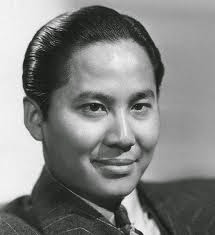
Keye Luke - Source
In addition to the positive portrayal of disability, I feel I have to note that Dark Delusion (and I'm assuming the rest of the Gillespie movies, but I haven't seen all of them) also portrays race in a positive light as well. Dr. Lee (Keye Luke) is a Chinese American doctor in Gillespie's hospital. Unlike so many Asian characters during this time period, he speaks without a pronounced foreign accent and heals based on medical facts rather than ancient "Oriental" wisdom. I will point out, however, that there is an African American staff member who speaks with an exaggerated "slave" sound (I'm not sure how else to describe it), so the movie is not completely without flaws.
 

If you would be interested in catching Dr. Gillespie in action, tune in to TCM Saturday afternoons at 1:30 pm PST during September and October.