Showing posts with label Message in the Movies. Show all posts

Thursday, October 30, 2014

Messages from Cat People

Cat People (1942) was an unexpected success. Despite its limited budget and initially being panned by some illustrious critics (The New York Times' Bosley Crowther for instance), the film was a huge hit with audiences. This fluke had critics rubbing their heads, so they went back and watched the movie again. The film proved itself and--to use a term from the genre--it rose from the dead in the eyes of the critics, prompting their praise.

What had the audience caught that the critics had missed? 

Many point to Jacques Tourneur's direction and how he is able to instill fear in the viewer sans blood and gore. Indeed the film is rather silent, forcing its audience to strain their ears to hear the dialogue. This makes the clicking of heels or low growl of a panther all the more adrenaline inducing. In America's Film Legacy, Daniel Eagan also credits editor Mark Robson for some of the suspense: "By altering the tempo of cuts, by juxtaposing wide shots and close-ups, Mark Robson builds tension out of thin air. A sudden noise becomes the equivalent of a shriek" (359). The audience keeps waiting for something to pop out of the shadows, but nothing ever does (that would have cost money). The fear is psychological.

Resisting her sexual urges...
This may be why Cat People is considered a landmark film today, but there is so much more to the movie than new scare tactics. At its center is Irena (Simone Simon), who fears passion will turn her into a deadly panther. Through the course of the movie, we are taught that female sexuality is dangerous and should be repressed. As long as she resists her urges, her husband Oliver (Kent Smith) is safe. Passion can rear its ugly head in more ways than consummation of marriage, though. Jealousy of her husband's properly repressed co-worker Alice (Jane Randolph) causes her transformation--always implied, never seen to maximize suspense. The message is twofold: female sexual repression is good while female jealousy is bad. 

The other Cat Woman (Elizabeth Russell) - Source
Messages about assimilation into American culture also emerge in Cat People. Made during the beginning stages World War II, Irena represents those whom Americans feared. As much as she tries to belong, Irena is marked with the scarlet "O," that of otherness. She is from Serbia, from a little village with customs her husband and his co-workers cannot understand. She speaks with a distinct accent and is acknowledged as "sister" by a fellow foreigner (Elizabeth Russell). When her husband's friends laugh at this strange woman, it is Irena at whom they are laughing, although they may not realize it at the time. Irena is an outsider. She does not and cannot belong. She dies, leaving behind the foreign form Oliver and Alice cannot understand.

Statue of King John slaying a cat - Source
Cat People also covers psychiatry in its messages. Dr. Judd (Tom Conway), the psychoanalyst, becomes the King John figure, purging the city of sin by curing sick minds. He also carries a sword of sorts: a blade within his cane (much like the one Ballin Mundson uses in Gilda). Dr. Judd eventually uses the blade to slay the cat-version of Irena, but he is unable to save his life. Had he truly listened to Irena during their psychoanalytic sessions instead of focusing on his own righteousness, he may have still been alive. His death represents the American public's lack of faith in psychiatry.

The success of Cat People was a pleasant surprise for RKO. Its use of sound, camera angles, and film cuts gives the movie a haunted feel and makes it a fun pick for Halloween. However, it is the messages that gave the movie double appeal to audiences who questioned female sexuality, foreign residents, and psychiatry. 

[Side note: You can catch Cat People on TCM Friday, October 31st at 8 am PST.]

Works Cited

Eagan, Daniel. America's Film Legacy: The Authoritative Guide to the Landmark 
     Movies in the National Film Registry. New York: Continuum International
      Publishing Group, 2010. Print.

Friday, October 17, 2014

The Paradox of Career, Marriage, & 1950s Movies


After my last post, I came across some interesting tidbits about working women in the 1950s. The info was too good to let pass, especially since we just explored career women in 1950s movies. According to two books I have been jumping between, married working women were more prevalent in the 1950s than in prior decades. Adrienne McLean in Being Rita Hayworth explains that "between 1950 and 1960 more than four million married women took jobs, accounting for 60 percent of all new workers" (17). In "Old Soldiers Never Die: Father's Little Dividend and the Fading Patriarch," Kristen Hatch provides a more specific detail: "In 1951 a third of American women of working age were in the labor force, and the majority of them were married" (46).

What?! I thought. The evidence I found in the movies said otherwise. The message seemed to say that a woman can find true happiness only in marriage, family, and a home.

So I checked the U.S Bureau of Labor Statistics (BLS). Sure enough, Hatch's statement regarding the number of working woman was accurate. Per "Labor Force Change, 1950-2050," an article in a BLS journal, "In 1950, the overall participation rate of women was 34 percent" (Toossi 18). This does not, however, indicate how many of the women were married. I continued digging. Another BLS article, "Family Labor Force Statistics" points out that "In 1950, participation rates of wives were much the same as they had been in 1944" (Waldman 17). Contrary to common belief, women did not leave their wartime jobs and crawl back into domesticity.

So why the paradox between movies and reality?

Some might say 34-percent is not a particularly large number, so there is not really a discrepancy. While this may seem like a small amount by today's numbers, I'm sure this seemed like a large percentage at the time. Another thought is that our current understanding of the 1950s woman is derived from Betty Friedan's The Feminine Mystique which is "flawed by its reliance on a handful of conservative writings" (McLean 16). Since I am not familiar with the "conservative writings" in question, I am not comfortable drawing a conclusion based on this theory.

Another possibility for the paradox lies in the very nature of movies. They are fantasies, often the ideal version of ourselves. Hatch hits upon this in her essay: "Our misconception that this was a time of stability with regard to gender and family life is largely due to the popular domestic comedies of the period, which created a fantasy of the typical American family" (Hatch 46).
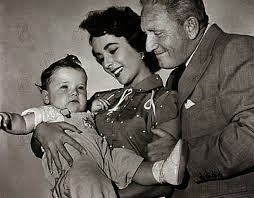
Elizabeth Taylor and Spencer Tracy
She further suggests films such as Father's Little Dividend (1951) attempted to preserve an old way of life that was slipping away as women became more financially independent. Whether or not the fantasy was created "to preserve the notion that the typical family is headed by a [male] breadwinner" (49) or the idea that a woman's place is in the home, what remains is a past painted a shade lighter than reality. I am reminded that history is written by the victors and the past is what we create it to be, not necessarily what it actually was. Or in this case, what the filmmakers of the 1950s created it to be. 

Works Cited

Hatch, Kristen. "Old Soldiers Never Die: Father's Little Dividend and the Fading 
      Patriarch." American Cinema of the 1950s: Themes and Variations. Ed. 
      Murray Pomerance. Piscataway, NJ: Rutgers University Press, 2005. 46-49. 
      Print.

McLean, Adrienne. Being Rita Hayworth: Labor, Identity, and Hollywood 
     Stardom. Piscataway, NJ: Rutgers University Press, 2004. Print.

Toossi, Mitra. "A century of change: the U.S. labor force, 1950-2050."  
      Monthly Labor Review May 2002: 15-28. Web. 13 Oct. 2014. 

Waldman, Elizabeth. "Labor force statistics from a family perspective."  
      Monthly Labor Review Dec. 1983: 16-20. Web. 13 Oct. 2014.

Monday, October 6, 2014

'50s Career Girls and Marriage

Not so easy to find is the 1950s career girl. But with a little research, I not only came across a great new book series that I can't wait to sink my teeth into, but also found an awesome example of a '50s career gal. It's an old favorite with a message I missed until I read Sumiko Higashi's essay in American Cinema of the 1950s: Themes and Variations. 
 
Froman's career & marriage don't mix.
  • With a Song in My Heart (1952) - This musical biopic chronicles singer Jane Froman's (Susan Hayward) rise to stardom, troubled marriage, and debilitating injury. Author Sumiko Higashi points out that the movie is careful to portray her success as being spurred forward by her husband as opposed to her own ambitions as a career woman. She laments that "she wants 'a real home'" and pities her husband because "'it isn't easy for any man being married to a woman in the spotlight'" (78). She further declares, "If [her career is] going to spoil our marriage, it just isn't worth it'" (78). After she is injured, it is the medical bills--again not her ambition--that prompt her to go back to her singing career. The message is clear: married career women work as a result of external circumstances not internal desire.
Memory triggered, I was able to come up with another 1950s movie with a career gal:
Poor Fred is taken for granted...
  • There's Always Tomorrow (1956) - Norma Miller Vale (Barbara Stanwyck) is a successful fashion designer. She meets up with a former co-worker, Cliff Groves (Fred MacMurray), who is married and has three teenage children. His marriage is in a bit of a rut, making the single and fancy free Norma very attractive. Cliff's wife Marion (Joan Bennett) is not concerned. Marion feels secure in her position, suspecting that Norma most likely envies her domestic life. Sure enough, nothing much comes from Cliff and Norma's brief dalliance, other than Norma's realization that her life is empty without a home, marriage, and children--just as Marion and we could have predicted. 

Join me next week as I complete the Career Girls and Marriage series with an analysis of '60s career girls in films.

Works Cited

Higashi, Sumiko. "With a Song in My Heart: Can This Star's Marriage Be Saved?"
         American Cinema of the 1950s: Themes and Variations. Ed. Murray 
        Pomerance. Piscataway, NJ: Rutgers University Press, 2005. 77-81. Print.


Monday, September 29, 2014

'40s Career Girls and Marriage

The 1940s were a unique time for the career girl. From 1942 to 1945, the boys were away at war which left a large gap in the workforce. Campaign posters, such as the one that came to be associated with Rosie the Riveter, encouraged women to take men's vacant spots. Whether or not this caused a switch in career girls and marriage on film is difficult to say. The first movie on my list was released prior to the war while the final film made its debut at the end of the decade. In any case, viewing a married career girl on screen would not have been as big of an anomaly as the decade prior. Although much more subtle, the message that career girls and marriage don't mix continued to be sprinkled throughout the '40s with some revolutionary gems popping up here and there.
 
  • His Girl Friday (1940) - The decade kicks off with this wonderful exception to the career versus marriage rule. Typically, the woman forgoes a career for marriage. In this movie, quite the opposite occurs. Hilda Johnson (Rosalind Russell) attempts to give up her career as a newspaper reporter to marry the stable--and boring--Bruce Baldwin (Ralph Bellamy). However hard she tries, though, she cannot resist the thrill of chasing a good story. In the end, her career wins, and she skips marrying Bruce in favor of Walter Burns (Cary Grant), who would prefer his star reporter to retain that status. Their marriage will not interfere with breaking news stories. An interesting side note: Hildy was originally supposed to be a man. Howard Hawks changed the character's gender after his secretary read the lines, and he liked the way dialogue sounded (TCMDb). This unique union of career and marriage was accidental.
  • Woman of the Year (1942) - Rival reporters Tess Harding (Katharine Hepburn) and Sam Craig (Spencer Tracy) fall in love and marry. Neither give up their career, and it isn't long before Sam feels neglected. Like last week's Ann Carver's Profession (1933), the wife is to blame. When Tess adopts a little refugee boy, Sam objects, explaining that they don't have "the kind of home he'd be happy in" quickly followed by the more direct jab, "Now if you could just spare about ten-percent of [your] heart from the world at large and apply it at home..." Tess may be named "Woman of the Year," but in his eyes she is not living up to the task. He tells her as much on the night of her awards banquet, which she is more concerned about attending than finding someone to stay with the boy. Before she leaves, he comments, "The Outstanding Woman of the Year isn't a woman at all." Ouch!
    Later her aunt Ellen, also a career woman, gets ready to tie the knot and shares with Tess that she would rather be "the prize" than continue to win prizes. That does it. Tess decides to change, to try to become a traditional wife.
    Unlike Ann Carver, there is no melodramatic final scene--this is a comedy after all. Tess fails miserably in her domestic endeavors. Her waffles overflow, her toast pops over zealously, and her coffee bubbles over. Sam decides to meet her halfway. He'll accept her as long his last name makes the title: Tess Harding Craig. The final gesture of "launching" her PR guy informs the audience that he wears the pants in the family now. Tradition has (somewhat) prevailed.
  • Mildred Pierce (1945) - I would be remiss if I did not mention this well known celluloid career woman. Unlike the other ladies in this category, Mildred Pierce (Joan Crawford) works in order to provide for her daughter Veda's (Ann Blyth) every whim. At one point, she even marries so her daughter has the social connections she (Veda) so desires. The movie is more a portrait of a self-sacrificing mother than a career girl who loves the work she does. Once Veda no longer needs her mother; i.e., goes to the big house, Mildred reunites with her first husband, and there is a sense that she will not be returning to the business world.

  • June Bride (1948) - When Linda Gilman (Bette Davis) crosses paths with her ex-beau Carey Jackson (Robert Montgomery), she tells him to forget she's a woman. She is now a career focused woman and wants no part in love. After all, he walked out on her three years prior. The message: a career woman is a bitter, scorned woman. How to cure it? (Because, the message reads, careers must be cured out of women.) True love, of course. The result is an enjoyable film filled with witty banter as Carey chases Linda, trying desperately to win her back. In the final minutes of the film, Linda has (surprise!) a change of heart and is determined to get Carey back. Up to this point, she has remained true to her career even while tinkering with love during moonlit moments. But then she offers to not only follow him wherever his stories take him, but also to do no more than carry his bags behind him. Somehow I can't image Bette Davis or her successful magazine editor character stooping so low. Message delivered nonetheless.
  • Adam's Rib (1949) - Amanda (Katharine Hepburn) and Adam Bonner (Spencer Tracy) are wife and husband lawyers who are able to have both successful careers and a successful marriage. The film chronicles a difficult time in their relationship as they take on opposing sides of a court cases. They push through with some laughs and lots of love (including one very memorable love pat, which brought to light the issue of whether or not it is okay for a husband to hit his wife even in jest) to demonstrate that a career girl can have a successful marriage. 

Going through the list of films this week, there are a few examples of women who were able to have successful careers and be happily married. Hildy (we assume), Tess, and Amanda. (Shout out for Rosalind Russell's and Katharine Hepburn's strong women roles!) Being a mother--and a working one at that, I couldn't help but notice something, er, someone missing from the equation: children. I wonder, would all have ended well if these women had a brood to raise at home? Or would we see a shift in the message--career and marriage can occur from time to time, but never with children? Another message worth exploring later down the road.

Join me next week as I continue to explore Career Girls and Marriage during the 1950s.

Monday, September 22, 2014

'30s Career Girls and Marriage

Sometimes the occasional rogue woman will try to "live like a man," finding contentment in her career. This week I examine what happens in a pair of films from the 1930s.

  • Female (1933) - What a dazzling display of girl power! Alison Drake (Ruth Chatterton) is the CEO of a large company and runs it with finesse and efficiency. She also treats men as they so often treat women. One by one, she invites her male employees home to "talk business." She sets the mood with music and Vodka and has her fun with them. The following morning, she dismisses them at the office. When they become "jealous, moody men," she transfers them out of state. Her career is her life, and she loves it.
    Chatterton in Female - LOVE this powerful dress!
    She meets her match in Jim Throne (George Brent), who is not so easily seduced. He chides her for thinking she's above "love and children, the things women were born for" (ah yes, the every girl should marry message in the movies). Alison is converted. She misses an important meeting to fetch her man and let him know she is his. Girl power? In the end she gives it all up, a gift to the man she wants to marry. Jim will run the business, and she'll run the home--complete with nine children. Now, I'm not advocating women use and abuse men, but the movie's ending was a bit of a let down. So much for the image of a powerful woman... 
  • Ann Carver's Profession (1933) - Here is another woman who loves her career. Ann Carver (Fay Wray) is "aching to go to work" instead of hanging around the home all day. Her husband Bill (Gene Raymond) approves until she gets a $5000 bonus for a court win compared to his measly $10 raise. Bill's delicate male ego is further bruised when he gets no love from his workaholic wife while she entertains business associates. (Hmmm....interesting double standard here. If it was he who entertained, would she be allowed a complaint? I think not.) Ann tries to smooth things over with her unhappy hubby. And behold--a pleasant surprise--she actually admits that she would be lying if she said she wanted to give up her career. Poor guy (ha!) feels forced to take a job as a crooner to make more money and give up his architect job in the process. It is her boss's (Claude Gillingwater) turn to dole out the advice, "a man can't stand the burden of obligation. Especially to a wife." (Good golly--really?!)
    Long story short, Bill becomes linked to a murder, and his wife must come to the rescue. In her final plea to the jury she blames herself for her husband falling into bad company. She believes she deserves the jury's "contempt" rather than her husband "for her blindness and stupidity." She explains she was like a "machine" with her work and "drove him out." She asks the jury to "pity any woman who has the most precious thing in life and blindly sacrificed it." She announces that the conclusion of the case will also be the end of her career as it has brought her "nothing but heartache and despair." Bill is found not guilty, she gives up her career, and they live happily ever after. Message? Career girls and marriage don't mix.
Join me next week as I continue to explore Career Girls and Marriage during the 1940s.

Monday, September 15, 2014

Every Girl Should Be Married

Sinatra & Reynolds
For better or worse, movies have been telling us that matrimonial bliss is the key to true happiness. More specifically, it--along with children--are the only way for a woman to be truly fulfilled. Men, on the other hand, might be content to live out their bachelor lives, finding satisfaction in their careers and multiple visitors in their beds. Therefore, the message goes, it is up to the woman to resort to trickery to help her chosen mate realize domestic bliss. A few examples through the decades:

  • Double Harness (1933) - Joan (Ann Harding), who is on verge of spinsterhood, declares, "Marriage is a woman's business," and goes about getting herself hitched. She arranges for her father to catch her with her boyfriend (William Powell) in a compromising situation, resulting in their "forced" marriage. Both find happiness when they discover they are also in love with each other. 

  • Every Girl Should Be Married (1948) - When Anabel (Betsy Drake) sets her sights on Madison (Cary Grant), an unmarried doctor, she does not have the pre-code convenience of being found in a negligee in Madison's apartment. No worries--she has many other tricks up her sleeve, including inciting all the women attending one of Madison's lectures to admit they used trickery to trap their husbands. Speaking of which... 

  • The Tender Trap (1955) - At this point in cinematic history, husband-trapping is a fact of life, so why not make a humorous romp of it? Like Powell's and Grant's characters, Charlie (Frank Sinatra) is a confirmed bachelor and there is a woman, Julie (Debbie Reynolds), with designs to snare him. Julie's plan doesn't succeed in the short run, but by the end of the movie--and a quick lapse of a year--Charlie proposes to her. All is well that ends well.

  • Sunday in New York (1963) - Eileen (Jane Fonda) goes to her brother (Cliff Robertson) to find out "what the right procedure is in snaring a suitable man for the laudable purpose of making a home together and life with children and church-going and growing old together as is mentioned in both testaments and many other highly respected sources." Translation: she needs help attaining that highest womanly goal--holy matrimony. Unlike Joan of the early 30s, she is not willing to put out to get a proposal. And unfortunately the ploys of Anabel and Julie have not worked either. The trap is in question not whether to trap. Because what else would a single twenty-two year old American gal do?  

In 2003, the whimsical Down With Love paid homage to this favorite movie plot of yesteryear, that of the great lengths women go in order to snag a husband. At the same time, it is poking fun too. *spoiler alert* 
We find out the events that have unfolded throughout the movie are part of Barbara's (Renee Zellweger) elaborate scheme to entrap Catcher Block (Ewan McGregor). This updated version contends with another factor, though: her career, which is put on equal footing with--if not higher than--marriage. Well, almost... Come back next week for a look at Career Girls and Marriage.

Saturday, August 9, 2014

Double Standards in the Bedroom

A few months ago, I discovered Sunday in New York (1963), a gem of a film that questions society's dividing line between madonna and whore. In less than ten minutes, Sunday in New York cuts to the chase when Eileen (Jane Fonda) asks her older brother Adam (Cliff Robertson), 
"Is a girl that's been going around with a fella a reasonable length of time supposed to go to bed with him or not?"
Her brother gives an emphatic no, so she rephrases the question. "Is she expected to?"
Despite being the virtuous girl, the madonna, Eileen's long time beau has dropped her because she wouldn't--to use the lingo of the movie--loosen her morals. This isn't the first time she has lost a boy for this reason. So what will big brother say--big brother who has intimate flings unbeknownst to sister? I bet you can guess.

"Men marry decent girls."   
And how exactly did we know this would be his answer in spite of his own amorous activities? Because when it comes to the bedroom, Hollywood has taught us there is a double standard between men and women. While men are allowed, nay, expected to sow their oats, women concern themselves with maintaining their reputations and reforming their wayward men. 

Consider the worldly Rock Hudson characters to Doris Day's virginal ones, 
"You are my inspiration..."
 from Pillow Talk (1959) - Source

Fred MacMurray's bureau full of pictures in Millionaire for Christy (1951),

Frank Sinatra's parade of women in The Tender Trap (1955), 

and when Jean/Lady Eve (Barbara Stanwyck) wants to punish Charles (Henry Fonda), she knows the surest way is to marry him and then reveal an unholy history. 
Lady Eve lists her many (invented) paramours 
in The Lady Eve (1941).
It is through her virtue, that a woman wins the grand prize: marriage (granted the pursuit of marriage as an end goal is a bit dated--although if the wedding industry is any indictor, we remain a marriage-centric society). Eileen has found the message false; she has been virtuous and "lost quite a boy." She questions the black-and-whiteness of labels:
"The catch is in the word decent. It seems to have a comparative connotation. Like the girl who was a little bit pregnant."
Indeed, the decade prior saw plenty of girls arrive at the alter "a little bit pregnant" (National Vital Statistics), suggesting that sometimes "decent" girls give in.  

When Eileen discovers her brother's hypocrisy, she attempts a fling of her own with an unsuspecting stranger, Mike Mitchell (Rod Taylor). Mike--like her brother--has had experience with women, but when he finds out Eileen is a "beginner," he won't go through with the seduction. He explains that there are two kinds of girls, and she doesn't belong in the group who has "affairs." 

Ah yes, the dichotomy of the female race. A quick gander at Saved! (2004) or Easy A (2010) will illustrate that Sunday in New York retains its relevance. No matter how far we say we've come from the 1960s, the truth remains that women are still divided into two categories. And while Sunday in New York goes easy on the language, we know that one group of gals receives derogatory titles based on their sexual activities whereas men are not so classified. Or if they are, it is done by taking a female derogatory term and adding "male" to the front of it. Point being, there is no male-exclusive equivalent. The double standard. 

The movie attempts to break free from pigeon-holing women into two types. And in some ways, it does. On the sidelines,   Mona (Jo Morrow) is perfectly willing and eager to meet Adam for one of their romantic jaunts; it is evident she is not a beginner. A series of comical mishaps prevent their affair, and by the end of the evening, Mona gets what every girl wants (according to another message in the movies) from Adam: a proposal of marriage. It may seem to be a result of staying chaste this particular Sunday, but she is virtuous through no fault of her own. Remember Adam's words earlier in the film? 
"Men marry decent girls." 
In his proposal, the movie redefines "decent." 

Eileen also gets the boy. While the voiceover at the end of the movie would have the audience believe that "nice things [...] happen to a girl if she remains virtuous even on a rainy Sunday in New York," we know it was not through Eileen's own doing that she remains virtuous. There is a hint that she may not make it through the night. We last see her in a passionate embrace with her new fiancé. The room is dark and they are wearing only pajamas. 

In his February 1964 review of the film, Bosley Crowther comments that Sunday in New York, in the light of "the past 10 years, [where] the once-unmentionable has been discussed at almost tedious length in films," is "a wee bit old-hat." Old hat is the voiceover; however, if you look closely at the peripheral and peek around the corner, there is a new message trying to break through. 

Tuesday, July 22, 2014

Paging Dr. Gillespie - Disability in the Movies

When it comes to dissecting messages in movies, I must say that the disability experience holds a special place in my heart because my masters thesis focused on this lens of literary analysis. The disability experience has been neglected over the years. Much has been written regarding how women have been portrayed, how people of different races have been portrayed, how people who are homosexual are portrayed, and so forth. On the other hand, the disability studies field is relatively new and lacking in number of scholarly articles with this critical lens (at the time of this entry, the only scholarly journal devoted to such analysis is the Journal of Literary and Cultural Disability Studies, which debuted in 2007). Nonetheless, it is important to consider the disability experience just as one might consider any other human experience. By analyzing the portrayal of disability in literature and films, we can begin to understand how societal attitudes and beliefs about disability have been informed and developed. 

What better place to start than by looking at classic movies?

The other night I tuned in to Dark Delusion (1947) because it starred Lucille Bremer, whose work I have been wanting to see more of. Imagine my surprise when in rolls Dr. Gillespie (Lionel Barrymore), a wheelchair-bound character featured in over a dozen films during the '30s and '40s. Unbeknownst to me, Dark Delusion was the last of the Dr. Gillespie (originally Dr. Kildare) series. 
Dr. Gillespie (Lionel Barrymore) advising
protege Dr. Kildare (Lew Ayres). 

- from an earlier movie in the series  Source
Dr. Gillespie is part cantankerous old man, part clown, and part caring mentor. He is the ideal boss or father, a lovable character portrayed by one hell of an actor. In the lighter moments of this installment of the series, he plays poker with the guys and intercepts a "top secret" telegram, a joke that he and his staff pull on one of the doctors. In the more serious moments, he mentors Dr. Coalt (James Craig), guiding him to the solution without the young doctor realizing it at the time. In other films of the series, Dr. Gillespie oversees and sometimes even lends a helping hand during  difficult operations.   

Traditionally, characters with disability inspire fear (Mr. Potter - also portrayed by Lionel Barrymore - in It's a Wonderful Life) or evoke pity (Quasimodo in The Hunchback of Notre Dame). Sometimes they are considered weak (Tiny Tim in The Christmas Carol) or in need of being fixed (Charly in Charly). But not Dr. Gillespie; he is a positive image of disability. The only time Dr. Gillespie's wheelchair; i.e., limitation, becomes noticeable is when he asks someone to open the door or to bring a patient downstairs (if not in the hospital where there is an elevator). 

It is interesting to note that Dr. Gillespie was not originally written as a wheelchair-bound character. Lionel Barrymore broke his hip, prompting the need for the chair. (His arthritis kept him in the chair during the later films.) As a result, the Dr. Gillespie character was written first as a man; the wheelchair was secondary. This is how characters with disabilities should be written--as whole people with personalities that do not revolve around their disability. 


As refreshing as it is to see the positive portrayal of disability, the fact that this occurred somewhat as a fluke may help explain why the screen does not reflect the societal attitude toward disability during the time it was made. Special care was taken to ensure that the public did not see President Franklin Delano Roosevelt in his wheelchair, which represented weakness in the eyes of the American public and the rest of the world.

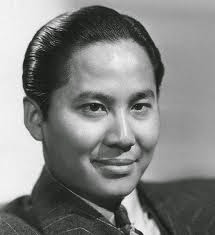
Keye Luke - Source
In addition to the positive portrayal of disability, I feel I have to note that Dark Delusion (and I'm assuming the rest of the Gillespie movies, but I haven't seen all of them) also portrays race in a positive light as well. Dr. Lee (Keye Luke) is a Chinese American doctor in Gillespie's hospital. Unlike so many Asian characters during this time period, he speaks without a pronounced foreign accent and heals based on medical facts rather than ancient "Oriental" wisdom. I will point out, however, that there is an African American staff member who speaks with an exaggerated "slave" sound (I'm not sure how else to describe it), so the movie is not completely without flaws.
 

If you would be interested in catching Dr. Gillespie in action, tune in to TCM Saturday afternoons at 1:30 pm PST during September and October.

Thursday, July 10, 2014

Escapism, Movies, and Lydia

It's summer, which means I finally have the opportunity to delve into books related to classic films; i.e., read for fun. Currently I am in the midst of Devin McKinney's The Man Who Saw a Ghost: The Life and Work of Henry Fonda. Although I am far from finished, I was particularly struck by the following reflection: 
It is a prevailing American wish in late 1934, as at nearly every other time: Give us the simple of it. Stage our national past in a diorama of period costume and antique activity; show us a day when there were still dreams undiscovered, vistas unseen. Take us back; take us away. (61)
The author was referring to the tendency to paint history in a shade we prefer versus the actual hue. McKinney speaks of Fonda's historical dramas, such as The Farmer Takes a Wife and Young Mr. Lincoln. However, I think this can also apply to the version of romance that has long been painted in the movies. The romance that our culture loves to love. The idea that if you love someone hard enough, they will change; the idea that unyielding devotion will result in love returned; the idea that life should be a continual stream of surprises, candy, and flowers (both in the literal and metaphorical sense - substitute as you wish); the idea that romantic hiccups can be neatly solved in ninety minutes; the idea of happily ever after. 

Movies that portray these messages are the ones to which society escapes after a relationship has failed or its thrill has subsided. These are the movies by which society judges itself, inevitably coming up short, with the oft result of destructive discontent. There are exceptions to the rule, more so in recent decades than in the glorious days of the silver screen. This is why silver screen exceptions are so, well, exceptional. Enter Lydia (1941).

Merle Oberon as Lydia - Source

Lydia is one of those exceptions. The film deals with illusions created by memory and fueled by poetry (the setting is pre-film, hence poetry). On the most basic level, the screenwriters want the audience to appreciate how memory is biased and flawed. Early in the movie, Lydia’s (Merle Oberon) recollection of a dance is juxtaposed with that of another character’s. The viewer realizes neither individual’s memory is entirely accurate—Lydia, wrapped up in the poetry and romance of the moment, believes the ball to be elaborate and beautiful while the other character, Michael (Joseph Cotten), who is smitten with Lydia and therefore jealous of her beau, remembers the ball as plain.

On a deeper level, though, the film is about how we delude ourselves by believing too strongly, too completely in the fantasy, and the effects of believing in that illusion. By the end of the film, an older Lydia recognizes her misplaced devotion to the memory of Richard (Alan Marshal), with whom she fell in love forty years prior. They are reunited, but it is not the grand reunion of two lovers secretly pining for each other as she may have fantasized. While he has been burned deep in her memory, preventing her from loving any other, she has hardly been a blip on his radar. He does not remember her despite their young idyllic winter weeks together [which begs the question - was it really idyllic, or was it only her memory that has washed it into something grand like the ballroom at the beginning of the movie?].

It would be very easy at this point for the movie to end happily with Michael professing once more his undying devotion to Lydia to which she would realize he is the one she has truly loved all these years and then they would kiss. The End. But that does not happen. There is no happily ever after for our characters. Lydia points out none of the men—this includes Michael—have truly known her. Just as Lydia has been in love with the illusion of Richard, Michael has been in love with the illusion of Lydia. There is no profession of love. The movie ends with the understanding that loving someone with all your might does not mean they will change or return your love; that not all romantic woes can be solved; that happily ever after does not always exist.

I suspect that the Breen Office, which was in charge of movie censorship, may have been behind the loveless ending. (During their weeks together, Lydia and Richard were living together unmarried and virtually unchaperoned. This would have been considered a sin, punishable by an unhappy ending.) Whatever the reason for the final cut, the film as it stands reminds the audience of the dangerous line between reality and illusion. In other words, enjoy being taken away, but don't mistake the image for truth. Or you might end up like Lydia.

[Side note - Lydia is not available on DVD, but you can catch it (or DVR it) on TCM on Friday, August 29th at 6 am EST.]